dev culture logo
Sign in

Featured Articles


Latest Articles

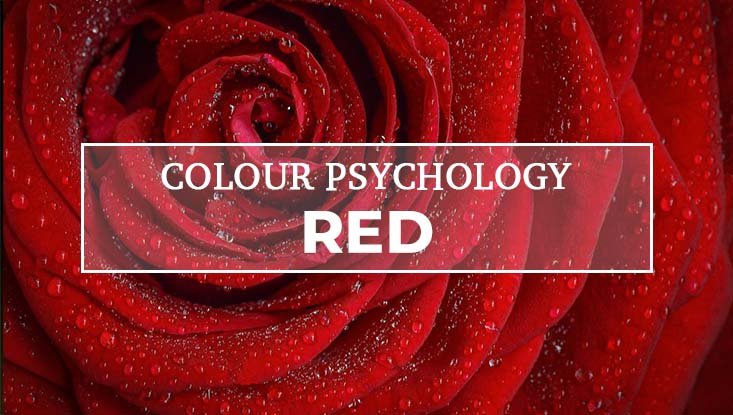
COLOUR PSYCHOLOGY - RED

COLOUR PSYCHOLOGY - RED is the ........ r and Warning Red is one of the most noticeable hues in the colour spectrum due to its long wavelength (second only to yellow). Its capacity to rapidly capture people's attention is why it is frequently employed to warn people of approaching danger. Consider the following: stop signs, sirens, fire trucks, and red traffic lights. In a non-literal sense, red is sometimes used to indicate danger. Using the phrase "in the red" to express financial loss or "red flag" to signal when anything is amiss with a person or circumstance are two examples. Exitement and Energy. This vibrant colour is also connected with excitement. According to studies, being exposed to or wearing red can elicit bodily consequences such as elevated blood pressure, enhanced metabolism, increased heart rate, and increased breathing rate. All of these physiological changes create an increase in your energy levels. Aggression People automatically equate red with the notion of rage across cultures. This association makes logical considering that when individuals are furious, their faces get red due to increased blood flow. Dominance The colour red can influence more than only mood and emotions. Wearing the colour red might also boost your chances of winning in sports. Passion and Desire However, red does not necessarily indicate  Read More

COLOUR PSYCHOLOGY - BLUE

COLOUR PSYCHOLOGY - BLUE is the ........ , leading to the invention of the colour ultramarine, the most costly of all paints. Following that, blue dyes expanded around the world and are now extensively utilised in arts, fashion, and other fields. Instead of blue, the hue was previously labelled and described as wine-dark.  FACTS: - Blue can also reduce heart rate and body warmth. - Blue is frequently associated with stability and dependability. Businesses that seek to present a secure image frequently use blue in their advertising and  marketing activities. - Because blue is so popular, it is generally perceived as a non-threatening hue that appears conservative and conventional. - Many individuals consider blue as their favourite colour, and it is the colour most favoured by men. - Blue evokes sentiments of peace or tranquillity. It is frequently described as quiet, secure, and organised. - Blue can also evoke feelings of grief or estrangement. Consider how a painting with a lot of blue, such as those created by Picasso during his "blue era,"   might make you feel lonely, melancholy, or forlorn. - Blue is frequently used to adorn offices since studies have shown that individuals are more productive in blue environments. - Blue is a common hue, yet it is also one of the least appealing. Some diet regimens even propose eating your meals on a blue plate. Aside from blueberr Read More

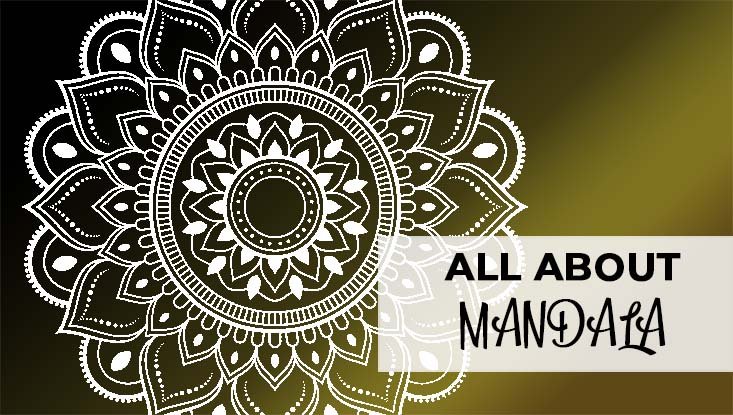
ALL ABOUT MANDALA

ALL ABOUT MANDALA is the ........ Mandala is known for its beautiful patterns and decorative elements that are connected and interconnected. A Mandala image can represent everything in life that is interconnected and never-ending. A circle is an excellent symbol for demonstrating that life has no end, spirits never vanish, and everything is simply a part of nature, the world, and the universe. Similarly, death, according to Buddhism, is not the final state of the existence cycle, but rather a passing phase of life. In other words, life is infinity and spiritual well-being. Mandala art is a symbolic representation of the universe, with the circle representing wholeness, totality, infinity, timelessness, and unity. In many Asian cultures, the mandala is revered as a spiritual and ritual symbol. It was invented by Hindus and quickly spread to other religions such as Christianity, Buddhism, Judaism, and Paganism. Furthermore, many Madala symbols can be found hidden in the artistic details of East Asian religious arts. HISTORY OF MANDALA Siddhartha Gautama, the Buddha's founder, was born in what is now known as Nepal. Though no exact date is known, historians believe he was born around 560 B.C. Gautama is said to have left his kingdom after becoming aware of human suffering in order to seek enlightenment through meditation and thoughtful action. He bega Read More

AKSHAR MAHOTSAV - 10th AUG. 2022

AKSHAR MAHOTSAV - 10th AUG. 2022 is the ........ course of the last several months, we have been all over India hosting a range of different courses, workshops, and meet-ups at various locations.  What to Expect: 1. Workshop - Brush Pen Calligraphy 2. Workshop - Pointed Pen Scripts 3. Workshop - Broad Edge Calligraphy 4. Pricing Discussion 5. Applications of Calligraphy 6. Group Activities Registration Fees - INR 499/- Register Now : Click Here Call For Calligraphy Entries Submit your entries at The Calligraphy FoundationBranch OfficeA-004, Aditya Garden City,Sector 6, Vasundhra GaziyabadUP - 201012  Read More

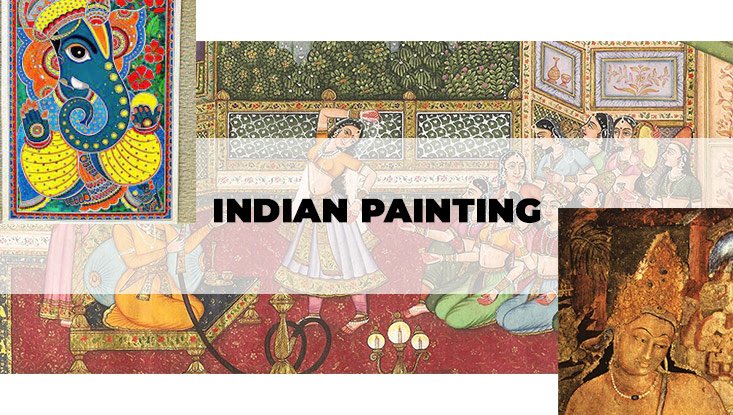
INDIAN PAINTING

INDIAN PAINTING is the ........ lived in these caverns. MADHUBANI PAINTING - CLICK HERE TO READ Madhubani painting is one of several well-known Indian art traditions. It is known as Mithila or Madhubani art since it is done in the Mithila area of Bihar and Nepal. These paintings are notable for portraying ceremonial material for certain events, such as festivals, religious ceremonies, and so on, and are often distinguished by complicated geometrical patterns. Madhubani paintings typically employ colours obtained from plants and other natural sources. MINIATURE PAINTING - CLICK HERE TO READ Miniature paintings are colorful handmade paintings that are relatively little in size, as the name indicates. One of the most prominent features of these paintings is the intricate brushwork, which contributes to their particular originality. Natural sources for the colors in the paintings include vegetables, indigo, precious stones, gold, and silver. While artists from all over the world use their paintings to depict many topics, the most common themes in Indian miniature paintings are Ragas, or musical note patterns, and religious and mythological narratives. MUGHAL PAINTING - CLICK HERE TO READ Mughal painting, often written Mogul, is a type of painting that originated in India during the reigns of Read More

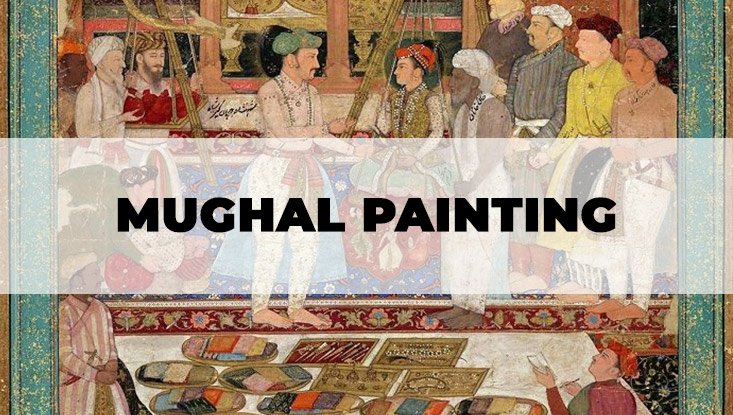
MUGHAL PAINTING

MUGHAL PAINTING is the ........ or Mughal painting throughout his reign. Humayun was joined by two Persian painters, Mir Sayyid Ali and Abd al-Samad, as he returned from exile. These two painters made numerous exquisite paintings, notably Khamsa of Nizami, which had 36 illuminated pages with diverse artists' styles. During Humayun's reign, there aren't many Mughal paintings. During his exile, he commissioned the Princess of the House of Timur, which is currently housed in the British Museum. Mughal paintings were most popular under the reigns of Akbar, Jahangir, and Shah Jahan. After Humayun's death, his son Akbar went on and extended Mughal art and architecture, as well as numerous paintings.   Growth of Mughal Painting Mughal paintings in India flourished and evolved throughout the reigns of Mughal Emperors Akbar, Jahangir, and Shah Jahan. Under Akbar Under Akbar's administration, the Mughal era's art flourished on a grand scale. A big number of painters were painting at the time under the guidance of two Persian artists. Because Akbar was fascinated in stories, his paintings are based on the Ramayana, Mahabharata, and Persian epics. Mughal paintings displayed elevated realism, which was accompanied with animal stories, portraits, landscapes, and so on. Under Jahangir Emperor Jahangir ruled from 1605 until 1627 and was a strong supporter of different art discipli Read More

MYSORE PAINTING

MYSORE PAINTING is the ........ ments of dedication and reverence. There are no words to describe the magnificence of these paintings. Squirrel hair, camel hair, and goat hair were used to make the brushes. Even the drawings were created using charcoal generated by burning tamarind twigs in an iron tube. Steps: The artist must first create an initial sketch of the picture on the base, which is made of cartridge paper pasted to a wooden base. Following that, he creates a 'gesso paste' of zinc oxide and Arabic gum. This paste is used to create a slightly elevated carving impression to those portions of the painting that need ornamentation and is allowed to dry. The surface is then covered with gold foil. The remainder of the artwork is created using watercolours. After the painting has completely dried, it is covered with thin paper and softly rubbed with a smooth soft stone.  Read More

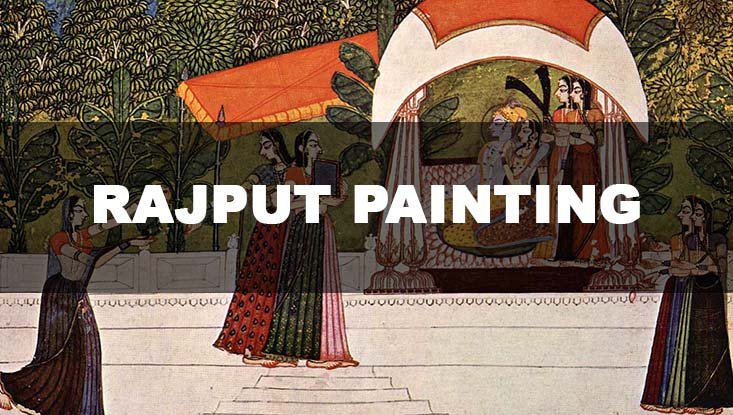
RAJPUT PAINTING

RAJPUT PAINTING is the ........ ikaner show a strong influence from Deccan paintings. Bikaner style paintings have its own distinct style, influenced by the surrounding hills and valleys, deserts, locations and forts, gardens, court scenes, and religious processions. Bundi-Kota Kalam School Rajput paintings first appeared in Bundi in the late 16th century, and they were heavily influenced by Mughal art. Wall paintings during the time of Rao Ratan Singh (1607-1631) are excellent examples of Bundi style paintings. Rao Chattar Sal (1631-1658) and Bhao Singh (1658-1681) placed a strong focus on court scenes as motifs. Other topics include those centred on aristocrats', lovers', and ladies' lives. Jaipur School Rajasthan is well-known for its paintings, art, and traditional dances. Jaipur is known as the Pink City of India because of its architectural beauty, pleasing colour palette, and well-planned layout. Jaipur and the nearby areas of Alwar and Tonk are well-known for their Jaipur-style paintings. Marwar School Ragamala, the first specimen of Rajasthani paintings of Marwar, was created in Pali around 1623. Portraits of nobility on horseback and darbar scenes were popular topics in the 18th century. Marwar paintings began to display Mughal influence with the entrance of painters such as Dalchand. Kishengarh School Kishangarh painting style wa Read More

PAHARI PAINTING

PAHARI PAINTING is the ........ y were painted may be misleading, since political borders in the period when they were made were fluid and regularly changed between various rulers.   Different Style of Painting: Basohli Painting Basohli paintings Basohli paintings are well-known in Jammu and Kashmir's Kathua district. This town has developed a stunning Devi series, a spectacular succession of manifestations of the Supreme Goddess. The excellent depiction of the Rasamanjari text is also well-known. Geometrical motifs, vivid colours, and lustrous enamel distinguish Basohli paintings. Jammu Painting Jammu paintings have significant similarities to Kangra paintings. In the late 17th and early 18th century, Jammu wrote the Shangri Ramayana.   Jasrota Painting The majority of Jasrota paintings may be seen in Jammu and Kashmir. It is centred on kingly events, court scenes, symbolic moments, and so on.   Mankot Painting Mankot Painting Mankot paintings may be found in Jammu and Kashmir. It resembles the Basohli kind. It employs brilliant colours and eye-catching topics. In the mid-seventeenth century, portraiture became a prominent theme. Later on, reality and subdued colours took the stage.   Chamba Painting Chamba Painting The style of Chamba paintings is simil Read More

Most Read

BEST ENTRY 2 - Character Design AWE ED. 3

BEST ENTRY 2 - Character Design AWE ED. 3 is the ........  Read More

WINNING ENTRY - Calligraphy AWE ED. 3

WINNING ENTRY - Calligraphy AWE ED. 3 is the ........ gs and amazing Calligraphy works of other students in the class.After learning Devnagari ,I learnt Basic Roman Calligraphy.After completing both The Scripts I partipated in Calligraphy Exhibition organised by APSC.        Then, in 2018 I started practicing  with Devnagari and followed few Calligraphy artists on Instagram.It made me more appealing to write and practice new scripts.I participated in Daily contests organised by Tobuovimaam,a Kolkata based Art and Event Organisation.It Inspired me a lot everyday to make new creations.Day and night I used to think of making new compositions.Recently learned Modi Script in online workshop by Pracheen Modi Organization and came across the history and many other important aspects of the script.Today I practice Scripts like Devnagri,Modi,Black letters,Foundational Hand,Italic,Nueland,Unical and Brush Lettering.The most appealing Script for me is Devnagri and the newly learned Modi.I aspire to learn copperplate script soon by this year. Other Artworks by Ms. Harshada Salgaonkar Follow her on Instagram: Click Here ! @harshada.salgaonkar READ E-MAGAZINE FOR MORE CLICK HERE !  Read More

STUDIO IAAD

STUDIO IAAD is the ........ comes to the design process, they have demonstrated mastery and large organisation capabilities in project execution and management. Studio IAAD brings with it, an absolute expertise in full design services, from conceptual design to construction supervision. As a studio, they are as committed to impeccable delivery of their designs as they are focused on their quality. Additionally, they continue to push their boundaries in design innovation and encourage the use of sustainable construction practices and green materials through a collaborative work process with clients, architects and specialist consultants. Although they draw inspiration from the past, they design for the present while keeping the future firmly in sight.  Their deep engagement with clients gives them critical insights, which, combined with their environmentally sensitive design process and responsible use of materials, helps them deliver bespoke solutions that are aesthetically and functionally superior. The culture at Studio IAAD is instilled by its passionate founders, known for their sharp eye for detail, design acumen and high-quality standards. Driven by talent, strategy and an enthusiastic team spirit, their work ethos has been developed around the courage and temerity to take up challenges and to be innovative while maintaining honesty, purity and integrity in their design Read More

AIPAN RANGOLI

AIPAN RANGOLI is the ........ cute rituals. Each Aipan design has a special significance to it and is designed with a specific purpose in mind. Some of the most popular Aipan designs are listed here. Traditional Aipan Traditional Aipan designs include  • linear art • geometrical motifs • flowers • imprints produced for decorative purposes. Namkarna Chauki Namkarna Chauki is a baby naming ritual done on the eleventh day of his birth. Namkarna Chauki Aipan is shown in the courtyard where the surya darshan (first exposure to the sun) is done. to the sun) is done. Bhadra The Bhadra form of Aipan is drawn in the puja room and during yajnas. It is further classified into numerous types based on the amount of dots. Bindu bhadra is a bhadra with 12 dots, whereas bindu bhadra with 24 dots is a bhadra with 24 dots. Acharya Chauka At the time of dhuliarghya, the kulguru stands on Acharya Chauka while conducting the marital ceremonies from the bridegroom's side. Namkarna Chauki Namkarna Chauki is a baby naming ritual done on the eleventh day of his birth. Namkarna Chauki Aipan is shown in the courtyard where the surya darshan (first exposure to the sun) is done. to the sun) is done. Bhuiyan The Bhuiyan design is created on the outside of a Soop (an ugly sketch of a demon). The depiction of Lakshmi-Narayan may be found on the inside side of the 'Soop.' Janeo Jan Read More